Lee Kuan Yew was the prime minster of Singapore from 1959 to 1990, making him the longest-serving PM in history. During his long rule, Singapore became the most prosperous nation in Southeast Asia.
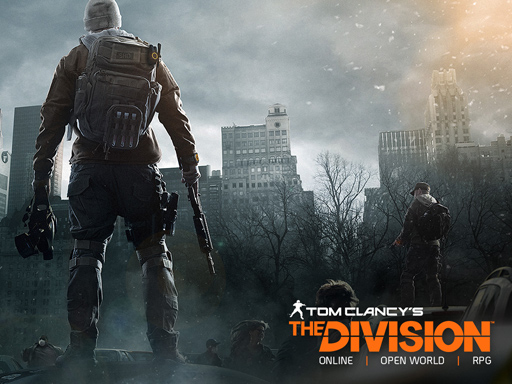
A devastating pandemic sweeps through New York City, and one by one, basic services fail. In only days, without food or water, society collapses into chaos.
Go to Blogger edit html and find these sentences.Now replace these sentences with your own descriptions.This theme is Bloggerized by Lasantha Bandara - Premiumbloggertemplates.com.
Go to Blogger edit html and find these sentences.Now replace these sentences with your own descriptions.This theme is Bloggerized by Lasantha Bandara - Premiumbloggertemplates.com.
Go to Blogger edit html and find these sentences.Now replace these sentences with your own descriptions.This theme is Bloggerized by Lasantha Bandara - Premiumbloggertemplates.com.
A devastating pandemic sweeps through New York City, and one by one,
basic services fail. In only days, without food or water, society
collapses into chaos. The Division, a classified unit of self-supported
tactical agents, is activated. Leading seemingly ordinary lives among
us, The Division agents are trained to operate independently of command,
as all else fails. Fighting to prevent the fall of society, the agents
will find themselves caught up in an epic conspiracy, forced to combat
not only the effects of a man made virus, but also the rising threat of
those behind it. When everything collapses, your mission begins.
Total breakdown
We live in a fragile and complex world, a web of interdependent systems
we rely on every day. When one fails, others follow, creating a deadly
domino effect that can cripple society in days. In Tom Clancy’s The
Division™, immerse yourself in a frighteningly chaotic and devastated
New York City, where all has failed. As a Division agent, your mission
is to restore order, team up with other agents and take back New York.
A new take on the Clancy series
Welcome to an online, open world RPG experience where exploration and
player progression are essential. Use your skills, weapons, and wits in
combat. Play in a persistent and dynamic environment that combines the
Tom Clancy™ series’ core authenticity and tactical decisions, RPG
action, trading, and much more.
100% social
Team up with friends in co-op, jump in and jump out at any time and use
your combined skills to fight the crisis, investigate the sources of the
virus and engage all threats… Even your own citizens. Seamlessly engage
in PvP, player-to-player trading, and experience suspenseful scenarios
where danger can come from anywhere and anyone.
Only on next-gen
Powered by our new game engine Snowdrop™, tailor-made for next-gen
consoles, Tom Clancy’s The Division achieves a whole new level of
game play quality. Snowdrop takes full advantage of the new consoles with
dynamic global illumination, stunning procedural destruction, and an
insane amount of detail and visual effects.
Gear up and live your own adventure
As part of The Division, harness state-of-the-art technology: both
networked and prototyped. Loot fallen foes and craft new, improved gear.
Completely customize your go-bag, an agent’s only supplies in the event
of collapse, and communicate with the other agents at all times with
your smart watch. Customize your agent with thousands of weapon types,
skill combinations, gear, and much more. The choices you make can help
forge a recovery or plunge the city deeper into chaos.
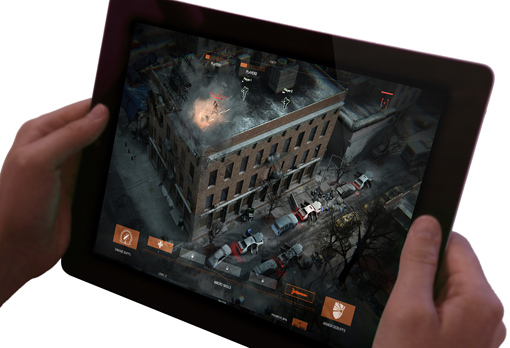
Revolutionary companion gaming
On
your smartphone or tablet, join your friends in real-time game play with
exclusive characters. The app gives you a bird’s-eye view of the
battlefield, the ability to attack enemies, and to place targets for
your allies or enhance their capabilities.
Lee
Kuan Yew was the prime minster of Singapore from 1959 to 1990, making
him the longest-serving PM in history. During his long rule, Singapore
became the most prosperous nation in Southeast Asia.
Synopsis
Born
in Singapore on September 16, 1923, Lee Kuan Yew became the
longest-serving prime minister in world history. Lee rose through the
ranks of his country's political system before becoming the first prime
minister of Singapore on June 5, 1959. In 1962, Lee led Singapore into a
merger with Malaysia, but three years later, Singapore left the union
for good. Lee resigned as prime minister in 1990, and his son became
prime minister in 2004. Lee died on March 23, 2015.
Early Years
Lee
Kuan Yew was born into a wealthy Chinese family that had resided in
Singapore since the 19th century. After World War II, Lee studied law at
Fitzwilliam College, in Cambridge, UK. In 1950, he was admitted to the
English bar, but instead of practicing law there, Lee returned to
Singapore to do so.
Political Beginnings
At
the time, Singapore was a British colony and held Britain's main naval
base in the Far East. The country was ruled by a governor and a
legislative council, mostly comprising wealthy Chinese businessmen who
were appointed rather than elected by the people. In the early 1950s,
Singapore buzzed with talk of constitutional reform and independence,
and Lee banded with other like minds to challenge the governing
structure of the country. Soon breaking from this group and taking a
more radical stance, in 1954 Lee became secretary-general of his own
party, the People's Action Party.
The PAP Evolves
In
1955, a new Singapore constitution was introduced. It increased the
number of elected seats on the council to 25 out of a total of 32,
thereby allowing only 7 seats to be filled by appointment. In the
elections that followed, the party founded by Lee's former colleagues,
the Labour Front, won 13 seats, while Lee's PAP won merely 3.
But
with his party represented on the council, in 1956 Lee headed to
London as part of the delegation seeking self-rule for Singapore. After
the negotiations failed, Singapore experienced a year of civil unrest,
but in 1957, Lee returned to London yet again as talks resumed.
The
next year, Lee helped negotiate what Singapore's status would be as a
self-governing state, and a new constitution was formed.
Under
the new constitution, national elections were held in June 1959. Lee
campaigned on an anticolonialist, anticommunist platform and called for
sweeping social reforms and an eventual federation with neighboring
countries.
Lee's party won a decisive victory, taking 43 of the
51 seats in the assembly, and Singapore gained self-governing status
(except in matters of defense and foreign affairs). Lee was sworn in as
prime minister on June 5, 1959, becoming the first prime minister of
an independent Singapore.
Singapore Independence
Once
in office, Lee Kuan Yew introduced a five-year plan calling for urban
renewal and construction of new public housing, greater rights for
women, educational reform and industrialization.
His plan also
called for a merger of Singapore with Malaysia, and after Malayan prime
minister Tunku Abdul Rahman proposed the formation of a federation that
would include Malaya, Singapore, Sabah and Sarawak, Lee began to
campaign in favor of the effort and to end British colonial rule for
good.
To show that the people of Singapore were supportive, Lee
used the results of a referendum held in September 1962, in which 70
percent of the votes were cast in favor of the proposal. So in 1963,
Singapore joined the newly created Federation of Malaysia. In elections
held shortly after, the PAP retained its control of Singapore's
Parliament, and Lee held onto his post as prime minister.
Split With Malaysia
Growing
tension between Chinese and Malays in the Federation, however,
resulted in rioting in Singapore, notably marked by the Prophet
Muhammad Birthday Riots, or Sino-Malay riots, of the summer of 1964. A
year later, with racial strife continuing, Lee was told by his Malaysian
colleagues that Singapore must leave the federation.
Lee was
passionate about working out a compromise, but his efforts proved
fruitless, and he signed a separation agreement on August 7, 1965. The
failure of the merger was a serious blow to Lee, who believed that
unity was crucial for Singapore's survival. In a televised press
conference, he was emotionally drained as he announced the formal
separation and Singapore's full independence:
"For me, it is a
moment of anguish," he said. "All my life ... I believed in Malaysian
merger and unity of the two territories. You know that we, as a people,
are connected by geography, economics, by ties of kinship ... It
literally broke everything that we stood for ... now Singapore shall be
forever a sovereign democratic and independent nation, founded upon
the principles of liberty and justice and ever seeking the welfare and
happiness of the people in a most and just equal society."
With
the broken union came problems beyond Lee's personal grief: Singapore's
lack of natural resources and a limited defensive capability were
major challenges.
Singapore needed a strong economy to survive as
an independent country, and Lee quickly spearheaded a program to
transform it into a major exporter of finished goods. He also
encouraged foreign investment and made moves to ensure a rising
standard of living for workers.
When the opposition party decided
to boycott Parliament from 1966 onward, the PAP won every seat in
Parliament in the elections of 1968, 1972, 1976 and 1980.
Later Years and Legacy
Lee
resigned as prime minister in November 1990 but remained the leader of
the PAP until 1992. After 14 years away, Lee's family took its place at
the head of the Singapore government once again in the summer of 2004,
when Lee's son Lee Hsien Loong took power.
In early 2015, Lee Kuan
Yew was hospitalized with pneumonia. By early March, he was on a
ventilator, in critical condition, and he died soon after, on March 23.
Lee
has left behind a legacy of an efficiently run country and as a leader
who brought prosperity unheard of before his tenure, at the cost of a
mildly authoritarian style of government. By the 1980s, Singapore,
under Lee's guidance, had a per capita income second only to Japan's in
East Asia, and the country had become a chief financial center of
Southeast Asia.


 We live in a fragile and complex world, a web of interdependent systems
we rely on every day. When one fails, others follow, creating a deadly
domino effect that can cripple society in days. In Tom Clancy’s The
Division™, immerse yourself in a frighteningly chaotic and devastated
New York City, where all has failed. As a Division agent, your mission
is to restore order, team up with other agents and take back New York.
We live in a fragile and complex world, a web of interdependent systems
we rely on every day. When one fails, others follow, creating a deadly
domino effect that can cripple society in days. In Tom Clancy’s The
Division™, immerse yourself in a frighteningly chaotic and devastated
New York City, where all has failed. As a Division agent, your mission
is to restore order, team up with other agents and take back New York.
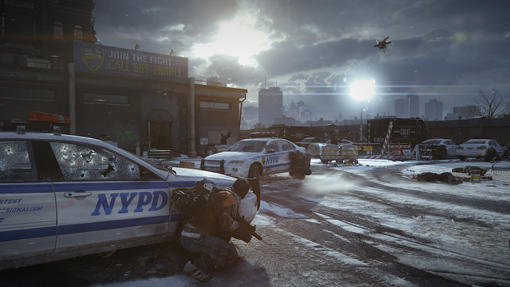
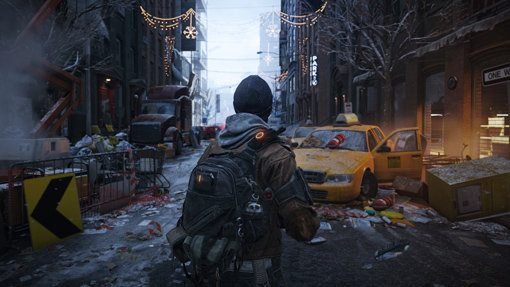
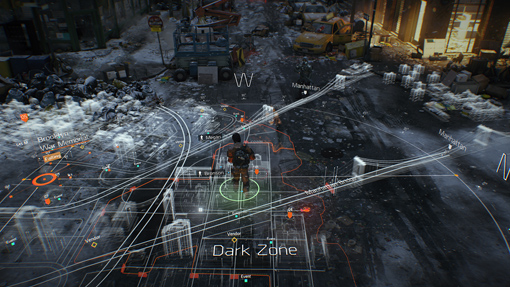 As part of The Division, harness state-of-the-art technology: both
networked and prototyped. Loot fallen foes and craft new, improved gear.
Completely customize your go-bag, an agent’s only supplies in the event
of collapse, and communicate with the other agents at all times with
your smart watch. Customize your agent with thousands of weapon types,
skill combinations, gear, and much more. The choices you make can help
forge a recovery or plunge the city deeper into chaos.
As part of The Division, harness state-of-the-art technology: both
networked and prototyped. Loot fallen foes and craft new, improved gear.
Completely customize your go-bag, an agent’s only supplies in the event
of collapse, and communicate with the other agents at all times with
your smart watch. Customize your agent with thousands of weapon types,
skill combinations, gear, and much more. The choices you make can help
forge a recovery or plunge the city deeper into chaos.